

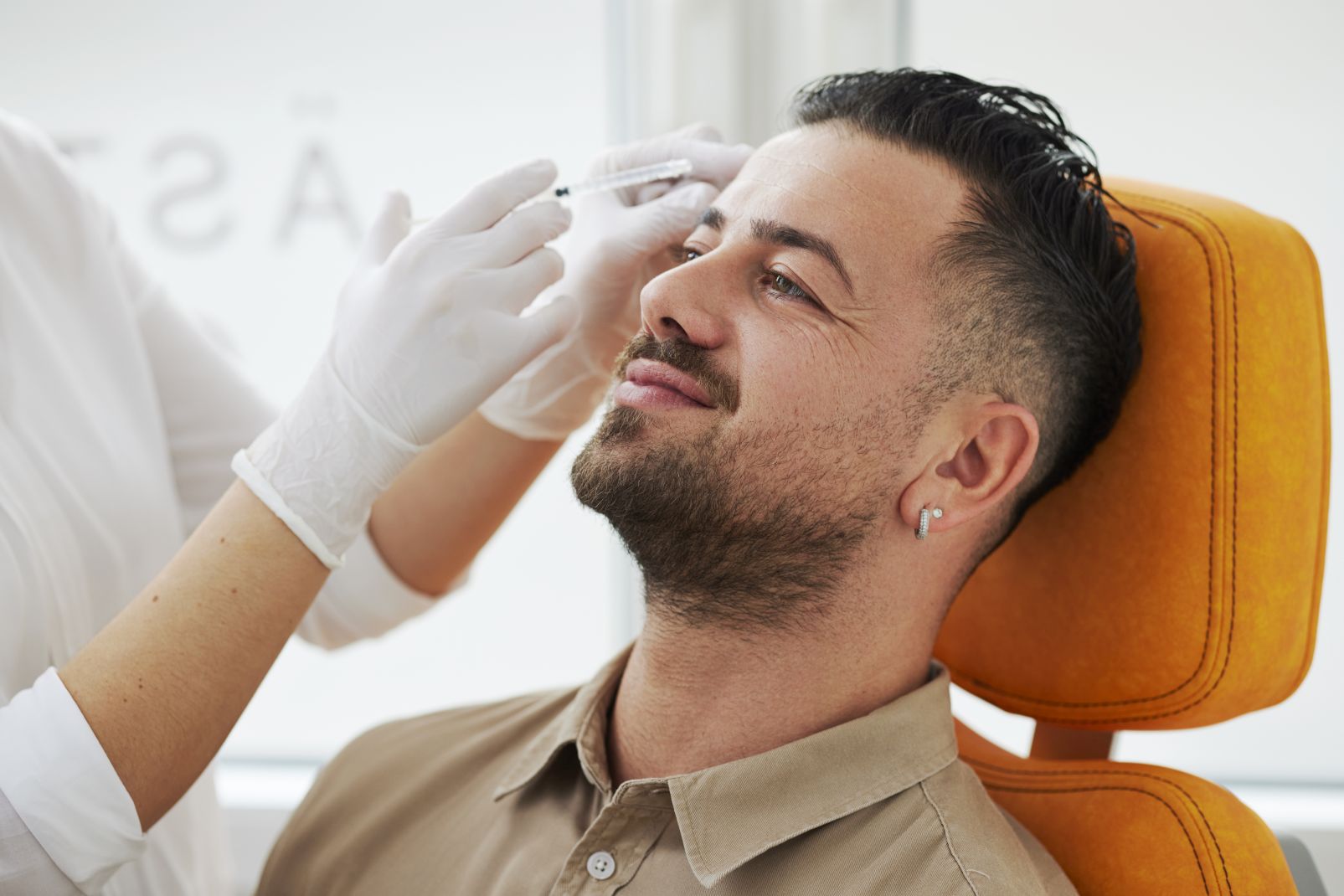
Botox® for migraines
In recent years, it has been shown that Botox® can be an extremely effective treatment for various types of pain, especially headaches and migraines. Some patients who originally came for wrinkle treatment reported surprising relief from their headaches after Botox® use, both in terms of frequency and severity of pain. Migraine patients also reported the same phenomenon. This observation led to extensive research that demonstrated a clear analgesic effect of botulinum toxin by inhibiting specific pain mediators. This effect is particularly evident in muscle pain, muscle tension and tension headaches. Thus, the use of Botox® against headaches and migraines opens up a promising alternative to pain relief from the usual painkillers. In this post, you will learn more about how Botox® helps with migraines, what benefits it offers, and how the treatment works.
What is meant by migraine?
Migraine is a complex neurological disease characterized by episodic, seizure-like severe headaches. These headaches occur mainly in young to middle-aged patients and show gender-specific differences, with women being affected more often than men. Interestingly, research suggests that migraine attacks disappear after menopause in many women. The headaches caused by migraines are usually described as unilateral and pulsating. They occur in attacks that can last anywhere from four hours to three days. They can be accompanied by a variety of symptoms. These include nausea, vomiting, diarrhea, dizziness, aura (sensory perception disorders) and neurological deficits such as visual disturbances. The severity of symptoms and seizures can vary greatly from person to person. In the medical community, migraines are considered chronic if headaches occur on at least 15 days a month and at least eight of these days have migraine-like symptoms. Previously, chronic migraine was not recognized as a disease in its own right, but in recent years this has changed and is now considered a separate condition.How can Botox® help with migraines?
Botox® has proven to be a promising treatment for migraines. It is already successfully used to relieve spasticity and is also used in aesthetic medicine, but in lower dosages. By combining experience from aesthetic medicine and the knowledge of neurosurgery, a treatment regimen was developed in which botulinum toxin is safely used at low doses. Treatment with Botox® aims to reduce muscle movement in the areas where the muscles can press on nerves and trigger migraine pain. For example, excessive muscle tension, such as frown lines from sitting in front of the laptop for a long time, can irritate the underlying nerve and trigger migraine attacks. Targeted injections of botulinum toxin can reduce these muscle movements and often effectively combat migraine triggers. In around 90% of the migraine patients treated, severe pain reductions or even complete disappearance of the migraine were observed. However, there is still a lack of knowledge about the various therapy options offered by doctors, as can be seen from many years of courses in Germany, Austria and Switzerland. Migraine therapy is a largely unknown area for many doctors. The ultimate goal of any treatment should always be to combat the cause of the symptoms and achieve a lasting effect. In many cases, this can be achieved with botulinum toxin and patients can experience a significant improvement in their quality of life. In a treatment with Botox® for migraine, the active ingredient is injected directly into the affected muscle region with a fine cannula. There, the botulinum toxin binds to the nerve endings of the muscles and inhibits the effect of the neurotransmitter acetylcholine, which is normally responsible for the transmission of stimuli between muscles and nerves. This leads to a reduction in muscle activity (the muscle remains more relaxed) and therefore a reduction in the frequency of migraine attacks. The above information on botulinum toxin is for your information only and not for advertising purposes. In particular, they cannot replace a personal consultation with a specialist.FAQ about Botox® for migraines
What are the causes of migraines?
The exact causes of migraines are not yet fully understood. There is a theory that inflammatory processes in the blood vessels in the brain could play a role. It is also suspected that the processing of pain signals in the brain could have a meaning. Stress often plays an important role in pain: nervousness and tension can increase pain or even contribute to its occurrence. Very hectic days without sufficient breaks can therefore promote headaches. However, sometimes a migraine occurs when stress subsides, such as on weekends or during the first few days of vacation. For people with migraines, irregular sleeping and eating habits can also increase the risk of an attack. There may also be a link between migraines, diet and physical activity. People with migraines can find out for themselves whether these factors have an influence on their migraines. Keeping a so-called “migraine diary” can be helpful in this regard.Has the effectiveness of Botox® against migraines been proven?
The effectiveness of Botox® in the treatment of migraines has been proven by several studies. In addition to interrupting the transmission of stimuli between the nerve and the muscle, Botox® is believed to inhibit other neuropeptides and neurotransmitters involved in pain irritation. Studies show that about 50-60% of patients experience a 50% improvement in headache days after the first treatment. With repeated therapy, the proportion of patients with improvement increases to about 60%. The effectiveness of Botox® for migraines was also proven in the 2010 PREEMPT study. This study included 1384 patients and showed a significant reduction in headache days and pain intensity. Botox® has been recognized by the German drug authority BfArM as an approved treatment option for migraines since 2011. Botox® is primarily used in adult patients who do not respond to or cannot tolerate conventional treatment methods. However, some patients may develop resistance to Botox® , which can cause the effectiveness to suddenly decrease after initial success. The goal of Botox® treatment is a clear improvement of the symptoms in order to reduce the regular intake of acute medication for headache treatment. Overall, Botox® has been shown to be an effective treatment option for migraines, especially in patients who do not respond to other therapies.For whom is migraine treatment with Botox® suitable?
Botox® treatment is generally suitable for all patients with migraines and can be particularly useful for patients for whom oral migraine medication does not have sufficient effect or is not tolerated. In some cases, however, we do not recommend Botox® treatment. These include, for example, patients who suffer from pre-existing neuromuscular diseases, allergies to certain ingredients, and infections or inflammations in the treatment areas. During antibiotic therapy, we also advise against Botox® treatment. Pregnant women or women during breastfeeding should also not have Botox® treatment carried out.What should you pay attention to before migraine treatment with Botox® ?
Before the treatment, a detailed consultation takes place in our practice. We will answer your questions and explain the exact treatment process as well as the risks and side effects. You should not take any blood-thinning medication before treatment (in consultation with your doctor, of course).What is the procedure of a treatment with Botox® for migraine?
Based on the information from the preliminary consultation, the Botox® treatment can be carried out directly. The injections are given at different points in the area of the forehead, head and neck, depending on the type and location of the pain. The injections themselves take only a few minutes and are largely painless. The Botox® is injected directly into or onto the muscles and unfolds its effect in the following days. After treatment, the patient can leave the clinic directly without any downtime.Where is Botox® injected for migraine treatment?
In the treatment of migraines with Botox® , various injection points are used in the head and neck area. The selection of treatment areas is based on the individual symptoms and pain regions of the patient. If the headache occurs mainly in the forehead, eye or temple area, treatment focuses on these regions. If the patient reports discomfort in the neck area, the tense muscles in the neck and neck are also treated. Often it is a combination of different areas that ultimately brings about relief of the symptoms for the patient. Several treatments may be needed to identify the main causes of the headache. Treatment with Botox® for migraines is a step-by-step process in which we carefully feel our way forward to achieve the best possible effectiveness. However, it should be noted that not every patient can successfully fight his/her migraine attacks with Botox® , but it is definitely worth a try. We will be happy to advise you and carry out the treatment expertly to help you alleviate your migraine symptoms.How long does the effect of Botox® against migraines last?
The effect of Botox® against migraines usually starts within two to three days after the treatment. After about ten days, the maximum effect is achieved. However, the effect of Botox® is limited in time, as the active ingredient is gradually broken down by the body. As a rule, the effect lasts for about three to four, but sometimes up to six months. After that, the treatment should be refreshed to maintain a lasting effect.How often is Botox® administered for migraines?
The frequency of Botox® administration for migraines varies depending on the patient and individual response to treatment. As a rule, we carry out one or two treatment appointments during the first application to determine the optimal dosage and injection points. We then repeat the Botox® treatment at intervals of about three months. In the course of the treatment, the intervals can be adjusted according to needs and individual reactions and, if necessary, slightly increased. To get the best possible relief, it is important that you consult with us if you have any problems so that we can determine the best treatment plan for you and address your specific needs.What are the advantages of Botox® in migraine therapy?
Treating migraines can be challenging, as different approaches must be tried to achieve the best possible relief from symptoms. While classic methods such as increased exercise, behavioral therapies and relaxation techniques are recommended, many patients encounter difficulties because painkillers are often suggested as primary therapy. It is known that long-term use of painkillers can be associated with various side effects. In addition, painkillers are often not sufficiently effective, especially in the case of severe migraine attacks with aura. Therefore, painkillers alone do not provide lasting and effective prevention of migraines. This is where botulinum toxin comes into play as a promising option. Used as a prophylaxis, Botox® can help prevent pain from the outset. This is particularly relevant for patients with chronic migraine, for whom other treatment approaches may not have been sufficiently effective. Botox® is injected in specific areas and acts specifically on the muscles to reduce their overactivity. This can significantly reduce the frequency and intensity of migraine attacks. However, treatment with Botox® is not suitable for every migraine patient. A thorough examination and consultation is essential to determine the individual suitability for this type of therapy. During a detailed appointment, we can analyze your specific situation and discuss the various treatment options. Alternative approaches such as combining Botox® with other therapies can also be considered to achieve the best possible results. If you are able to locate the exact location of your migraine pain well, treatment with botulinum toxin could be an optimal pain therapy for you. By injecting it into the affected areas, Botox® can help reduce muscle tension and excessive contractions, which are often associated with migraine attacks. This can lead to a significant improvement in your quality of life and help you get rid of your pain. If you also suffer from migraines, we would like to invite you to take advantage of our appointment to talk about the various treatment options in peace and quiet. Together, we can develop an individual treatment plan that is tailored to your needs and well-being. Our goal is to provide you with the best possible support so that you can live a life free of migraine pain.What are the alternatives to the treatment of migraines?
Medication for migraine
Migraine can be treated both acutely during an attack and preventively between attacks. For mild to moderate symptoms, it is recommended to take painkillers such as acetylsalicylic acid (ASA), ibuprofen, paracetamol, diclofenac or naproxen. Triptans are another option and are used when migraine attacks are more severe or accompanied by an aura. These drugs work by influencing the neurotransmitter serotonin and narrowing the dilated blood vessels in the head. Triptans should be taken as early as possible, but can also be taken at any time during a migraine attack. If the desired effect does not occur, a neurologist should be consulted to test other triptans. However, there are cases in which the intake of triptans is not recommended, such as in the case of certain heart or vascular diseases. In Germany, various triptans are approved for the treatment of migraines, including almotriptan, eletriptan, frovatriptan, naratriptan, rizatriptan, sumatriptan, and zolmitriptan.Chiropractic for migraine
Chiropractic is a medical treatment method that aims to release blockages of the joints, especially the spine, without resorting to medication or surgical interventions. A chiropractor can normalize disturbed nerve pathways by treating impaired joints or partial dislocations that may be due to swelling or problems with bone, muscle, or connective tissue structures. A special form of chiropractic is the sacro occipital technique, in which the chiropractor works between the occipital and sacrum to correct misalignments. This technique uses the patient’s breathing movements and his/her own weight to set targeted treatment impulses. The sacro occipital technique is often used for pelvic misalignments, as an oblique pelvis affects the statics of the entire spine. By using the technique, the pelvis can be corrected, which has an effect on the entire nervous system and the body’s self-healing powers. The treatment is carried out in a gentle and natural way to balance the nervous system and stimulate the body’s self-healing powers.Are there any risks or side effects of using Botox® for migraines?
When used correctly, Botox® treatment for migraines is associated with a low risk. It is important that the doctor performing the procedure has the necessary anatomical knowledge and sufficient experience with Botox® treatments. Otherwise, you may experience undesirable side effects such as eyebrow drooping. As a rule, the after-effects of the treatment are limited to mild swelling, redness or occasional bruising. Occasionally, patients also report temporarily increased headaches or neck pain, but these should subside quickly. Treatments in the forehead area can result in a subtle smoothing of the skin. It can also happen that the treatment triggers a pain attack. It is advisable to plan a free time or recovery period after the treatment. However, pain attacks are very rare, so you don’t have to be afraid of them. The full effect of the treatment usually occurs after a few days and lasts for a few months. Repeated treatment can be carried out without any problems after just two weeks, especially if the area to be treated is to be expanded.How much does a Botox® treatment for migraines cost?
The exact price depends on the scope of treatment. After we have become aware of your complaints, we can give you a specific cost item.Is migraine treatment with Botox® covered by health insurance?
Reimbursement is possible under certain conditions, especially if you suffer from chronic migraines and have already tried several migraine medications without success. Chronic migraine is defined as if you suffer from at least 15 headache days a month, including migraine for at least eight days. We are at your disposal to advise you in detail about the use of Botox® against migraines and to discuss the possibility of cost coverage by your health insurance company.
LipfillerWrinkle treatment | Botulinum toxinBruxism treatment near StuttgartVolumetric therapyFiller | Hyaluronic acidThread Lifting | Soft-LiftingBotox® against sweatingPermanent hair removalHair loss treatmentVampire Lifting | PRP autohaemotherapyPhilArt Skinbooster | PolynucleotidesRADIESSE®The first visitSculptra®